
Understanding hearing loss
One in five people experience hearing loss. It affects more than just your ears.
Two kinds of hearing loss exist
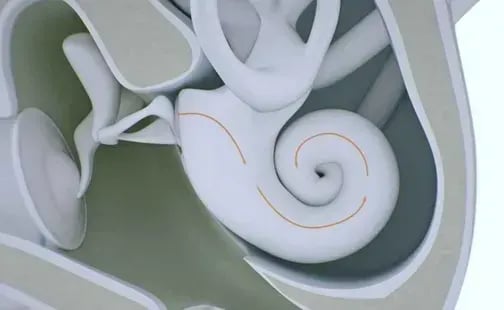
Sensorineural hearing loss happens when the inner ear or nerve pathways are damaged. Conductive hearing loss occurs when sound cannot travel properly through the middle ear to the inner ear.
Sensorineural hearing loss from nerve damage
Conductive hearing loss from middle ear issues
Early Signs of Hearing Loss
Recognizing the signs of hearing loss for you or your family member will help in being proactive. Knowing the symptoms and signs is an important first step towards correcting your hearing loss.
Conversations
Do you have difficulty following conversations? Have you noticed you have to ask people to repeat themselves in large groups?
Phone Conversations
Do you struggle to understand phone conversations, frequently asking for repetitions even in quiet situations?
People just mumbling?
Do people sound like they are mumbling when you are having a conversation more often than
before?
Locating sounds
Have you noticed you are having difficulty locating where sounds are coming from?
Tinnitus
Constant ringing or thumping in one or both ears? It could be tinnitus.
Turning up the volume
Has your family been telling you that the TV volume is too loud?
Untreated hearing loss changes the brain
Johns Hopkins research shows untreated hearing loss accelerates cognitive decline and increases dementia risk significantly. The brain expends extra energy processing incomplete sound signals, leaving fewer resources for memory and thinking.
Cognitive decline accelerates without treatment
Social isolation compounds the damage over time
Dementia risk increases substantially with untreated loss
.webp)
Questions
Find answers about hearing loss, treatment, and what comes next.
Hearing loss comes from damage to the inner ear, aging, loud noise exposure, or illness. Sometimes it's conductive, meaning the middle ear can't pass sound properly. Most often it's sensorineural, where the nerve itself is damaged.
Sensorineural hearing loss cannot be reversed once the nerve cells are damaged. Conductive hearing loss sometimes can be treated medically or surgically. Hearing aids help restore function in most cases of permanent loss.
One in five people experience hearing loss today. It increases with age but affects people of all ages. It's one of the most common health conditions in the world.
Untreated hearing loss accelerates cognitive decline and increases dementia risk according to Johns Hopkins research. The brain works harder to process sound, leaving fewer resources for memory and thinking. Social isolation often follows, compounding the damage.
Hearing aids work well for 97% of sensorineural hearing loss cases when properly fit. Modern devices are discreet and customized to your specific hearing pattern. They restore connection to conversations, music, and the world around you.
Get your hearing tested today
A simple test reveals what you need to know about your hearing.

.webp)